Plate Tectonics
Created on: 2024-12-12
Tags: #platetectonics
Course: Astrobiology
Definition
The earth’s crust and upper mantle are broken into section called plates which around on the top of the mantle like rafts.
There are 20 crustal plates among them 7 are major plates.
Types of Plates
- Oceanic Plates: Plates below the ocean
- Thin (5-7 KM)
- Higher density
- Predominantly Mafic (Si Poor, rich in Fe, Mg, Ca)
- Continental Plates: Plates below the continents.
- Thick
- Lower Density
- Predominantly Felsic (Si rich, poor in Fe, Mg, Ca)
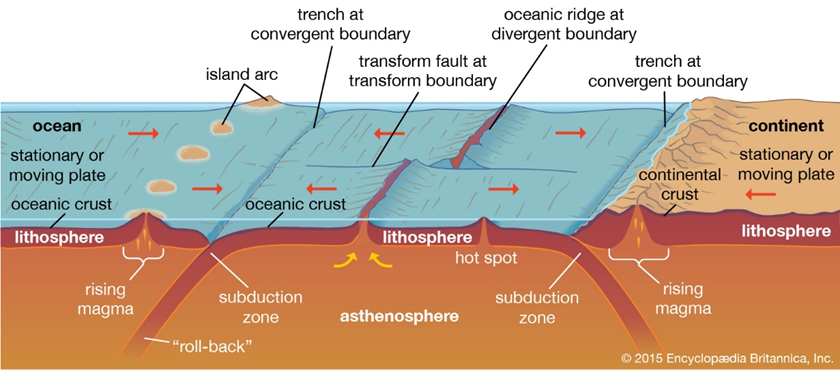
Plate Movements
- In the mantle hot material rises towards the lithosphere.
- It cools back and sinks down. The cycle form a large convection cell.
- This convection cell is causing the plate movement and creates a stress in the crust known as Tectonic Forces
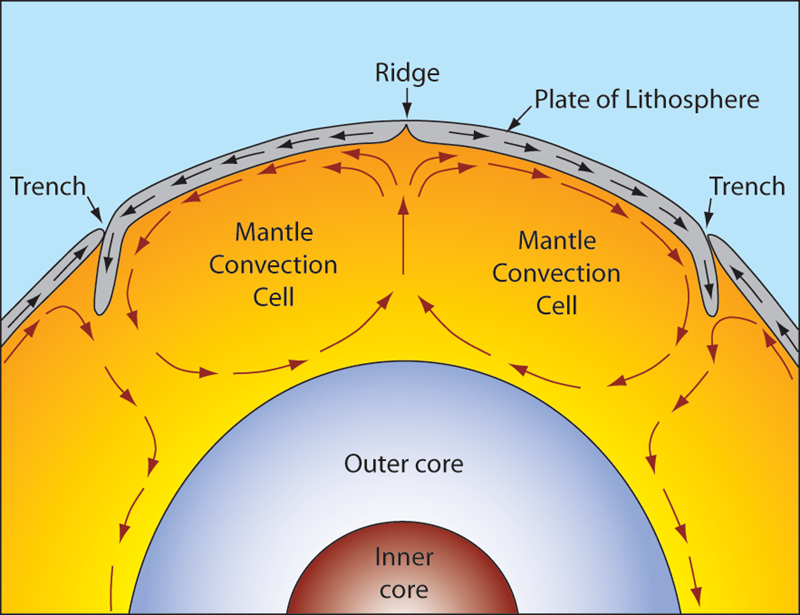
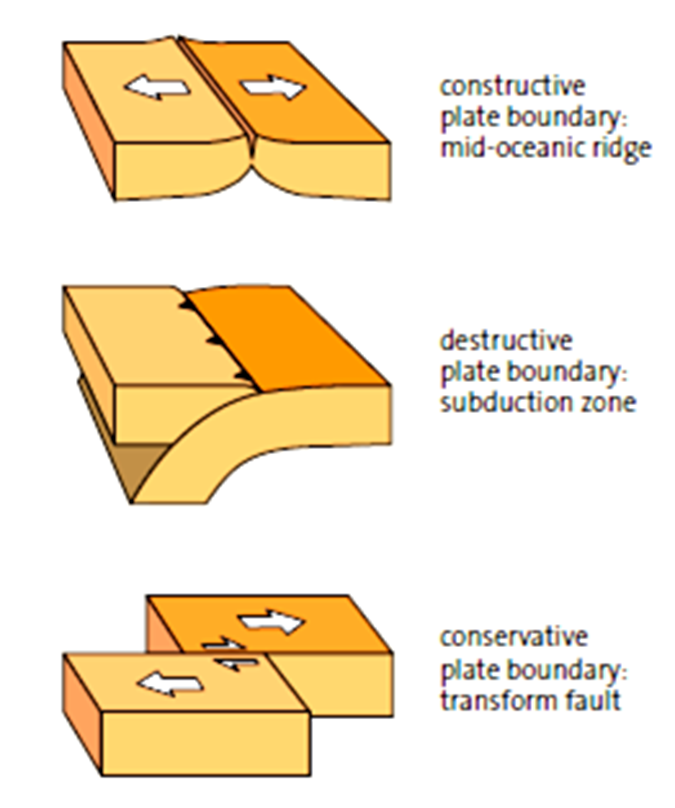
Plate Boundaries
- Divergent plate boundary
- They create empty space where upper mantle is exposed and magma flows in to create more plate known as Seafloor Spreading.
- Used to determine the magnetic polarities of the earth.
- Newer ocean floor near the ridges.
- Convergent plate boundary
- Boundaries between two plates that are colliding.
- Continental Plate v/s Continental Plate forms a folded and thrust faulted mountains.
- Ocean Plate v/s Continental Plate forms a subduction zone (trench) where the more dense plate slides under the less dense plate. Also forms a volcanic arc.
- Ocean Plate v/s Ocean Plate forms a trench and an island arc.
- Transform plate boundary
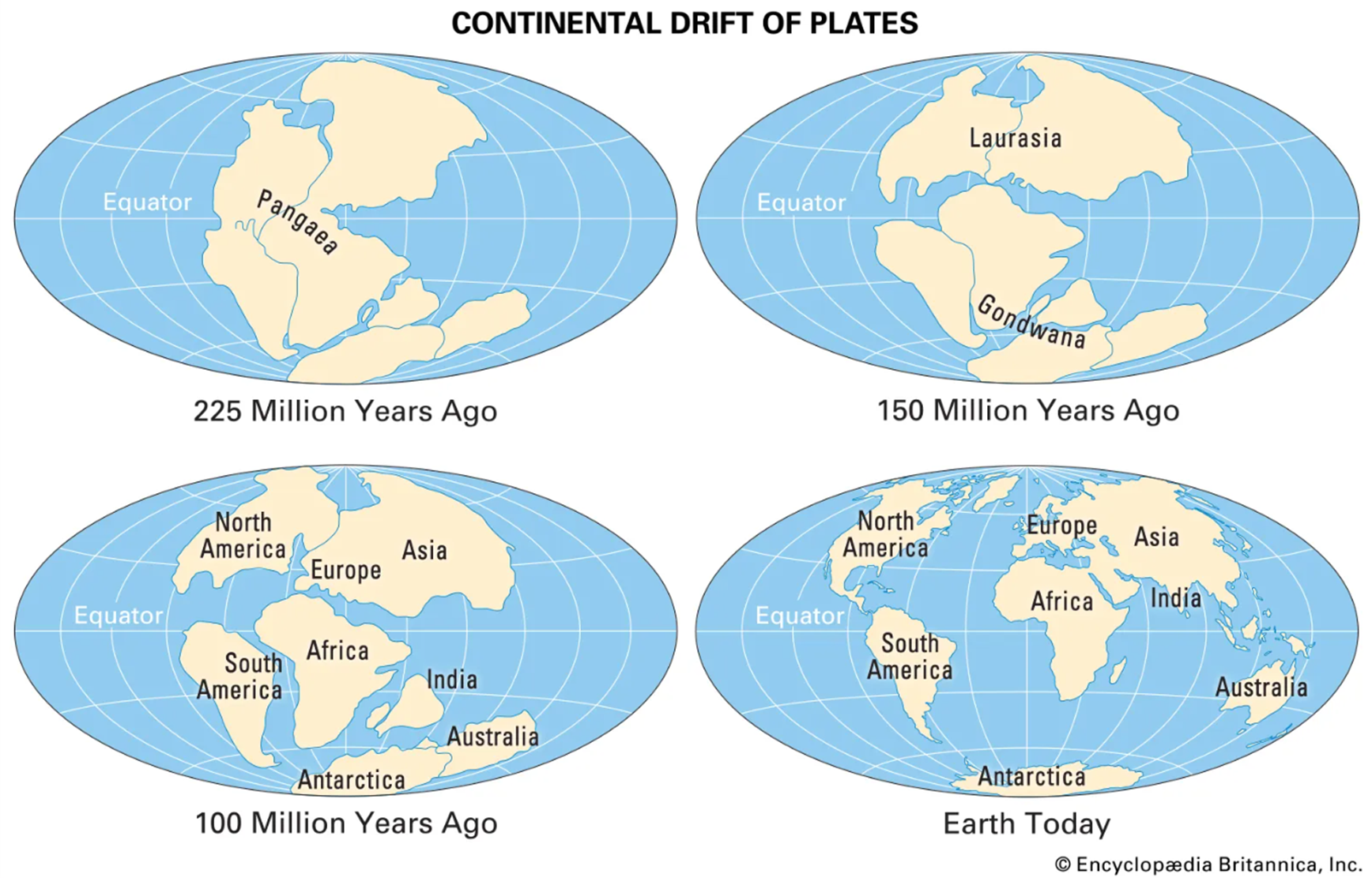
Continental Drift Theory
Linked from
- No other published notes link here yet.