Space Biology
Created on: 2024-12-07
Tags: #SpaceBiology
Course: Astrobiology
Definition
Six major environmental factors in space
- Gravity
- Micrometeoroids and space junk
- Atmosphere
- Radiation
- Vacuum
- Charged Particles
Microgravity: Any place in space where perceived gravity is smaller than on Earth.
Organisms studied in Space
- Bacteria
- Invertebrates: Cricket, Spider, Snail, Fruit Fly, Wasp, Beetle, Amoeba
- Vertebrates: Dog, Cat, Human, Mouse, Rabbit, Monkey
- Birds: Quail, Chicken
- Aquatic Species: Sea urchin, jelly fish, toadfish, frog, swordtail fish.
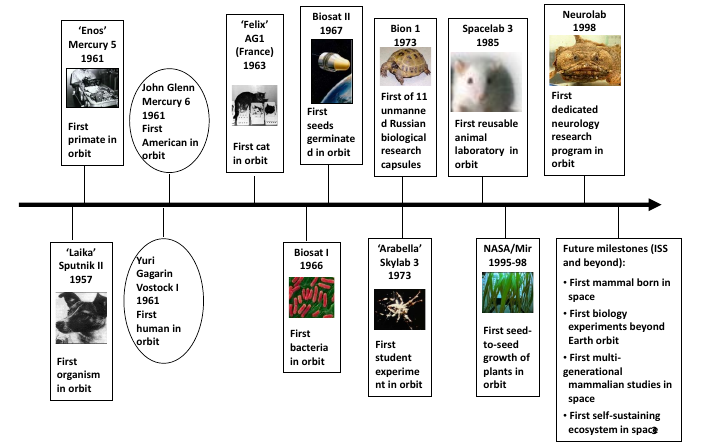
Space biology focus on the ISS
- To understand at cell and molecular level
- Understand underlying biochemical and molecular mechanisms
- Model organisms used for study.
- Well-characterized
- Genetically sequenced
- Microbes, Round worm, Fruit fly, Rodent
Effect of Spaceflight on Astronaut’s health
- Radiation Risk
- Puffy Face
- Cardiovascular risk
- Bone loss
- Immune system decrement
- Muscle Loss
- Impaired Vestibular System (Sense of Balance)
- Visual Impairments
Microbial response to space environment
Three microbial phenotypes (Observable characteristic change due to interaction of its genotype with environment) will change in space
- Growth: Bacillus safensis grew 60% better in space than on Earth
- Antibiotic resistance: Occurs due to mutation in some, they survive and spread, later they may transfer this resistance to other species.
- Virulence: Harmfulness of any microbe
STS-115 S.typhimurium experiments
- Change in group of genes which help the bacteria adapt to space environment.
- Decrease in time of death of mice in space (due to bacteria).
- Increased mortality of mice in space (due to bacteria).
- Decreased LD50 (Dosage required to kill 50% of the population) in space.
- Increased aggregation of cells in space.
Fruit Flies for Spaceflight studies
- Basic biology is highly conserved.
- 77% disease gene similarity.
- Smaller size, easy to culture and inexpensive.
- Low requirements for volume and crew time.
- Short life-cycle allows for multiple generations during space flight studies.
- Study of development of kidney stone model in fruit flies with varied concentration of salts.
Human response to Space
- Long duration missions are rare but in future long duration missions will take humans to Mars and beyond.
- Comprehensive studies are needed to assess impact of long-duration spaceflight on human body, brain and overall physiology.
- Year-long twins study.
- Genetically identical twins
- On was on ISS and other on ground.
Linked from
- No other published notes link here yet.